
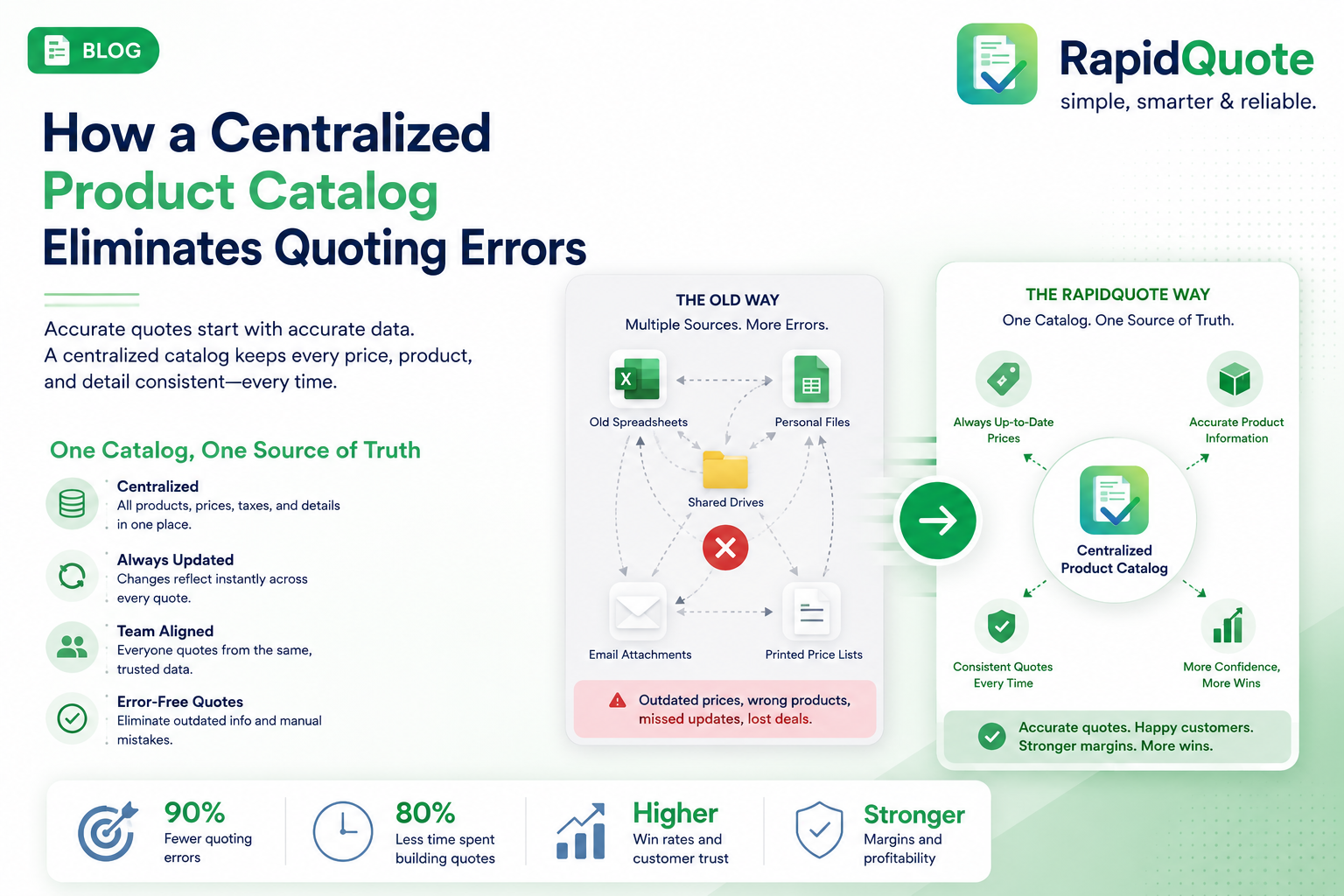
How a Centralized Product Catalog Eliminates Quoting Errors
The Root Cause of Most Quoting Mistakes
Ask any sales manager where quoting errors come from, and the answer is almost always the same: "Someone used an old price list."
Products change. Prices change. Bundles get updated. But the spreadsheet that your newest sales rep is building quotes from? It was last updated eight months ago.
This isn't a discipline problem. It's a systems problem. When pricing truth lives in multiple places - a shared drive here, a personal spreadsheet there - errors are inevitable.
One Catalog, One Source of Truth
A product catalog is a single, maintained database of everything your business sells. It contains:
- Product names and SKUs exactly as they should appear on client-facing documents
- Current pricing for each tier or customer segment
- Descriptions ready to drop into a quote without editing
- Bundling rules so common combinations are pre-configured
When a sales rep builds a quote, they search the catalog and select items. They never type a price manually. They never copy-paste from an old document.
The Ripple Effect on Quote Quality
Centralizing your catalog does more than prevent errors. It standardizes the language your team uses, which matters more than you might think.
When every rep describes "Website Maintenance Package - 10 hrs/mo" the same way, clients don't get confused about what they're buying. Scope disagreements decrease. Renewals are smoother because the client already knows exactly what the line item means.
Tiered Pricing Without Spreadsheet Gymnastics
Many businesses offer different pricing to different customer segments - volume discounts, partner rates, long-term contract pricing. Managing this across multiple spreadsheets is error-prone and difficult to update.
A catalog supports tiered pricing rules natively. When a rep selects a product for an enterprise client, the catalog automatically applies the enterprise rate. No lookups, no manual overrides, no mistakes.
Keeping the Catalog Current
The value of a catalog depends entirely on it being maintained. A few practices that keep it reliable:
- Designate one person as the catalog owner (usually the operations or finance lead)
- Review pricing quarterly, or immediately when costs change
- Archive discontinued products rather than deleting them, so historical quotes still make sense
- Use a change log so reps know what changed and when
The Compound Benefit Over Time
Every quote sent from a maintained catalog is a quote with accurate pricing, consistent language, and zero manual data entry. Over a year of quoting, that adds up to fewer pricing disputes, faster approvals, and a professional reputation that compounds with every client interaction.
The catalog isn't glamorous. But it's the foundation that everything else - speed, accuracy, professionalism - is built on.